
CLICCS Quarterly Magazine
Every three months we would like to keep you posted about climate research at CLICCS. Send an email to franziska.neigenfind@uni-hamburg.de to subscribe.
From 2024 – Our latest issues
From 2021 to 2023
Barrier-free Articles
to the accessible Newsletter
The PDF ist barrier-free.
Gouvernance and the Influence of society in Times of Global Upheaval
How Climate Protection is Challenging the Liberal World

From climate justice and generational justice to regulating CO2 emissions – efforts to mitigate the climate crisis have produced a range of new norms.Yet the corresponding obligations are often a source of controversy. For example, how should responsibilities and burdens be distributed around the world?
How much methane is released in the tundra

Infinitely vast, not a tree in sight, and with permanently frozen soil: the tundra is an important carbon reservoir. Yet climate change is now warming the Arctic regions, causing permafrost to thaw.
German eco-taxes takes effect

Since 1999, gasoline and diesel have been taxed in Germany. Initially planned as an ambitious project, the eco-tax was locked in at 15 cents per liter as early as 2003. Until now, there have been doubts about its benefits.
Carbon Dioxide in the Ocean: Hidden Uncertainties

The Southern Ocean has absorbed ca. 40 percent of the global anthropogenic carbon emissions, providing a substantial buffer to climate change. How will carbon flows between the ocean and atmosphere change in the future?
It’s All Up to Society
1.5-degree Goal of the Paris agreement not in sight. What to do now?

The Hamburg Climate Futures Outlook 2023 analyzed ten key social drivers, from climate policy and the media to consumption patterns, together with six physical processes. According to its fi ndings, achieving the 1.5-degree goal is no longer plausible. What to do now? We spoke with Dr. Anna Pagnone and Dr. Andrés López Rivera, who
co-edited the study.
We need speed!

Climate change, our linear throw-away-society and pollution are all elements of the current polycrisis. The required change can seem too big and too complex to be done quickly – after all, all established models state that it takes at least 30 to 50 years for a paradigm change to take place, often longer. But according to the IPCC reports, we don‘t have much time left. We need big changes now.
Focus on the coastal ocean

Where does the carbon come from? And where does it go? To date, Earth system models haven’t adequately investigated the processes at work in coastal waters: they either consider the whole world, at low resolution – or a given region in detail, but without global context. A new model from Dr. Moritz Mathis and colleagues now offers detailed insights without neglecting global processes.
The path toward climate goals

The graphic shows the outcomes of the Hamburg Climate Futures Outlook 2023, a comprehensive CLICCS study. The symbols represent the ten key social drivers on the way to worldwide deep decarbonization that were investigated.
Climate Targets
Climate Targets: Can Companies Pull Off the Transition?
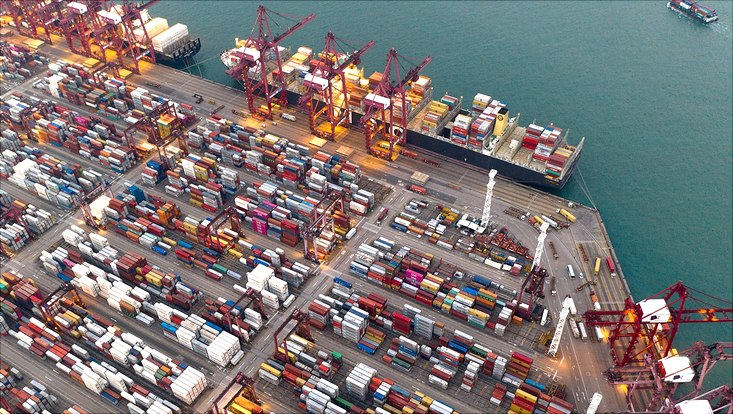
Professor Anita Engels and her team are investigating the decarbonization of business. Twenty German and international companies accepted the researchers’ invitation to a dialogue...
How Will Germans Eat in 2050?
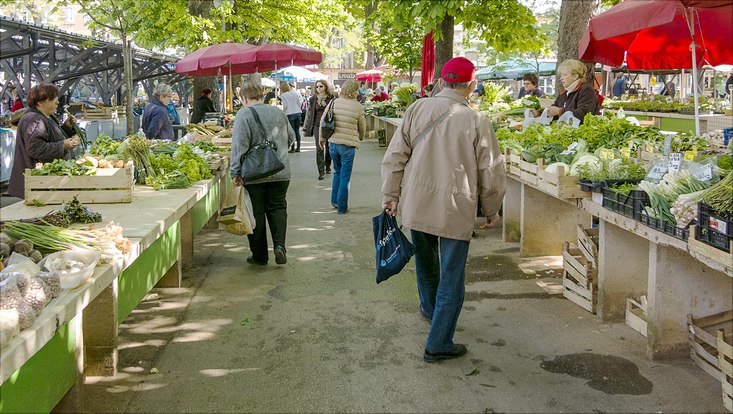
Cutting greenhouse-gas emissions by 65 percent – according to its climate protection laws, Germany has to do so by 2030. And agriculture is meant to contribute more than a third of the reduction...
Involving Climate Initiatives
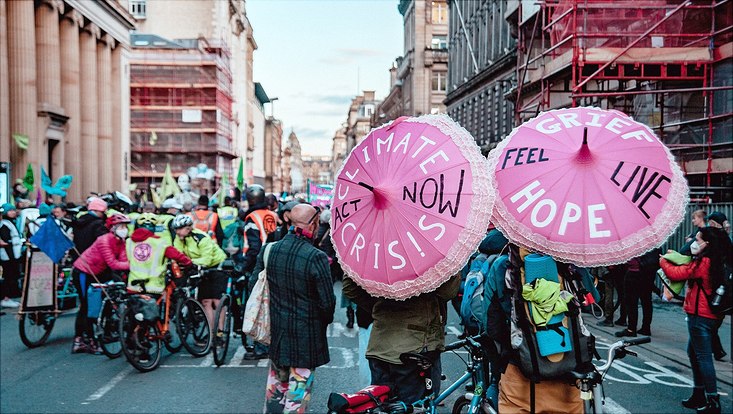
Prof. Stefan Aykut has been studying UN Climate Change Conferences (COPs) since 2008. In 2021, the sociologist traveled to Glasgow with seven colleagues to examine the political and social dynamics on site. At a conference with 40,000 participants, a lot happens at the same time.
Coastal Protection – Inspired by Nature
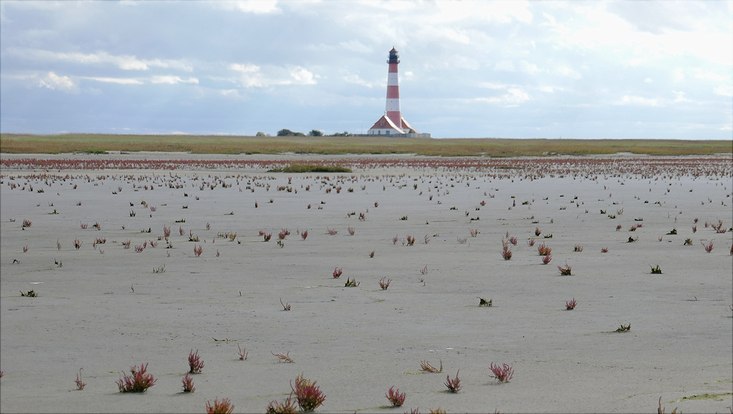
Flooding, storms, and erosion: climate change is impacting coastal regions and endangering the people living in them. What are referred to as Nature-based Solutions can facilitate climate impact adaptation, effectively combining and balancing engineering, nature conservation, and...
From Global Doom to Sustainable Solutions
How News Magazines Frame our Future with Climate Change

When it comes to climate change, many people rely on the media to keep informed. But how our future could look like is portrayed in a variety of ways. Journalists create powerful visions that can promote climate-friendly behavior. A team led by Prof. Michael Brüggemann and Dr. Lars Guenther has...
Drawing on Local Climate Knowledge for Adaptation and Protection

In countless regions around the globe, many people’s livelihoods depend on natural resources, and some also face poverty. In such cases, the effects of climate change are especially serious.
In Nepal, Dr. Prem Raj Neupane and Kumar Darjee conducted interviews in 337 households located near six...
Using 3D Images to Better Understand Polar Lows

On December 18, 2002, a massive cold-air front formed in the Arctic Ocean. The icy air blew from the North Pole and across the Arctic sea ice. Over open waters it swelled into a several-hundred-meter-high wall between Greenland and Russia. When this cold dry air meets warm moist air over the...
Tipping Systems

Tipping points aren’t just found in the physical climate system. In societies, too, there can be massive, abrupt and irreversible upheavals, e.g. when widespread dissatisfaction leads to revolutions or escalates into spirals of violence.
We still know too little about the mutual influences...
The PDF is barrier-free.