CLICCS
Cluster of ExcellenceClimate, Climatic Change,
and Society (CLICCS)
and Society (CLICCS)
Photo: UHH/Denstorf
5 June 2026, by Franziska Neigenfind
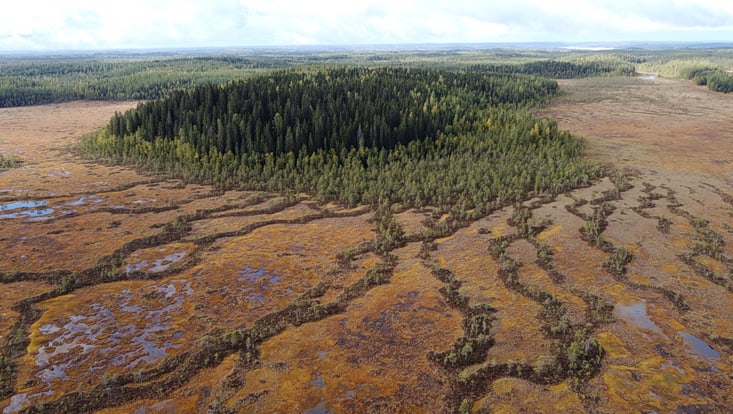
Photo: Katharina Jentzsch
Geo-ecologist Katharina Jentzsch has been awarded the 2025 Wladimir Köppen Prize for her outstanding research into greenhouse gases in the bog landscapes of Finland. In her dissertation, which she wrote at the University of Potsdam and the Alfred Wegener Institute, she focuses on the complex interactions between methane and CO2 emissions in these wetlands, which play an important part in the global climate system. Whereas it was previously assumed that the water level was the key factor for bogs’ greenhouse-gas balance, her paper shows that various plant species regulate the formation, conversion and release of methane – an aspect that has frequently received insufficient attention in computer models on climate change. In addition, her work shows how varied the methane flows within a single bog can be and how this is connected to numerous plant communities, the hydrological conditions, and small-scale landscape features.
The plant species in a given bog determine how much methane is formed, transformed into carbon dioxide, or released directly into the atmosphere. For example, the stems of hollow-stalked bog plants work like chimneys, channeling methane directly from the soil to the atmosphere. In contrast, methane is transformed into carbon dioxide in the mossy layer, yielding a climate gas with a substantially better greenhouse-gas balance. Katharina Jentzsch investigated these processes across seasons at a raised bog in Finland. Above all, she concentrated on the differences between individual vegetation types and microforms – the smallest areas with their own unique conditions, and a hallmark of raised bogs.
Moreover, she applied a broad range of methods, e.g. extensive gas-flux monitoring, isotopic techniques and statistical analyses, as well as vegetation experiments and drone-based cartography. What she found: a very clear influence on the part of plants. Above all, certain bog mosses regulate methane emissions. Further, the field data shows that the spatial distribution of plants, water levels and microforms on the bog’s surface goes a long way toward explaining the observed variability of methane flows.
In her work, the prizewinner also pursues an innovative social sciences approach to systematically investigate potential sources of uncertainty and variability in the observational data: she conducts an expert survey and considers not just the technical observations themselves, but also the interplay of methods, environmental conditions and human actions. “Katharina Jentzsch has very cleverly combined her in-depth expertise in the fields of ecology, meteorology and geophysics. My heartfelt congratulations go to her on winning the Wladimir Köppen Prize,” says CLICCS Speaker Prof. Johanna Baehr. “She has impressively succeeded in establishing how vegetation influences the greenhouse-gas emissions from bogs.” Her findings will deepen our understanding of how bogs are reacting to climate change and how renaturalization efforts can be designed to effectively reduce greenhouse-gas emissions. Further, they are particularly relevant for practical climate protection measures like the rewetting of former bogs.
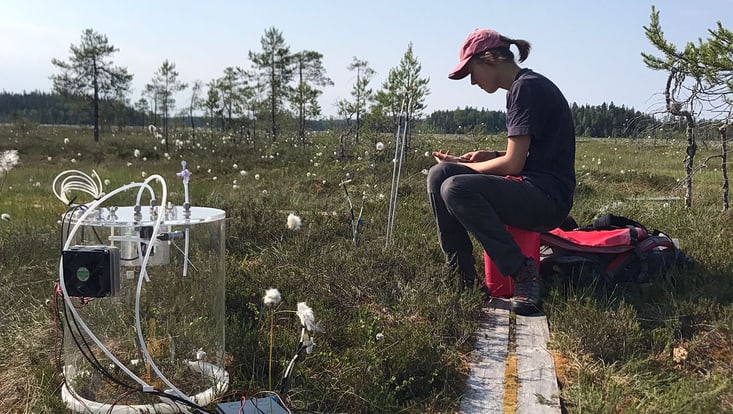
Photo: Privat
Geo-ecologist Katharina Jentzsch engaged in fieldwork at Siikaneva bog, southern Finland.
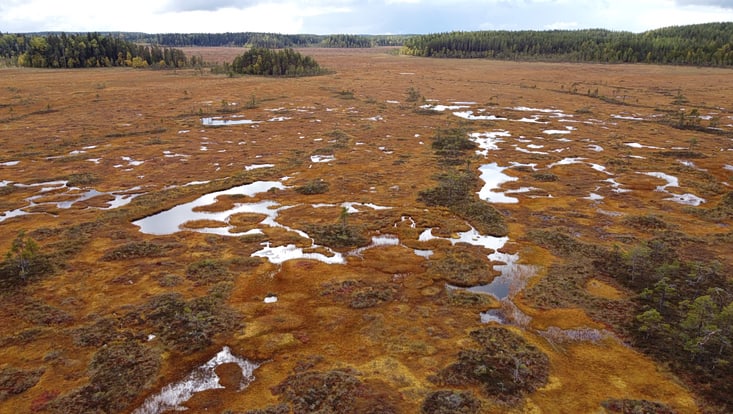
Photo: Katharina Jentzsch
Barren beauty: the raised bog is riddled with wet hollows and patches of open water.
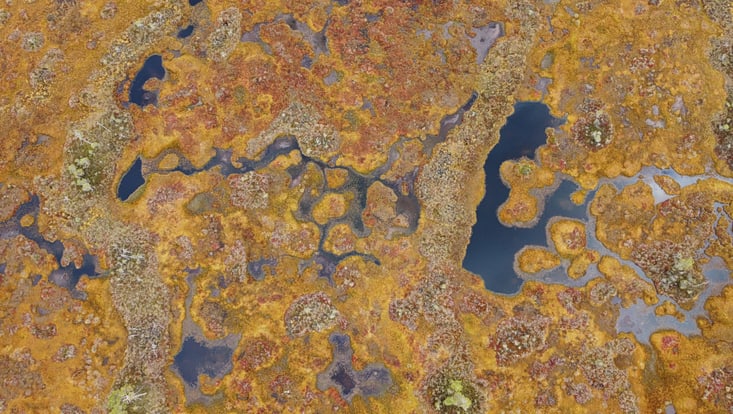
Photo: Katharina Jentzsch
In these wetlands, large amounts of organic carbon are converted and can be released into the atmosphere as the greenhouse gases methane and carbon dioxide.
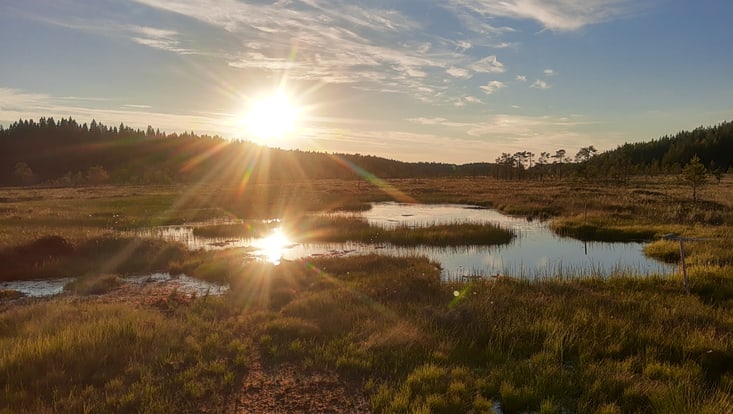
Photo: Katharina Jentzsch
Summer at a Finnish bog: now the grasses and mosses, which influence how much methane is released, are thriving. Other critical factors include the water level and diurnal and annual temperature changes.
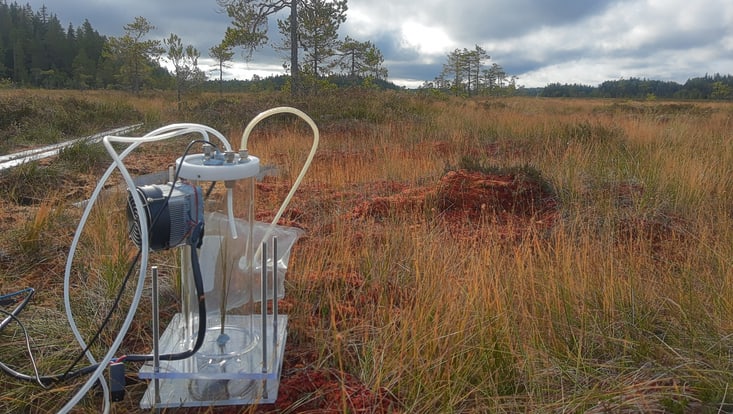
Photo: Katharina Jentzsch
Like chimneys, hollow-stalked bog plants like grasses pipe methane directly into the atmosphere. In the foreground, the chamber used to measure gas fluxes can be seen.