CLICCS
Cluster of ExcellenceClimate, Climatic Change,
and Society (CLICCS)
and Society (CLICCS)
Photo: UHH/Denstorf
31 March 2026, by Franziska Neigenfind

Photo: UHH/CLICCS
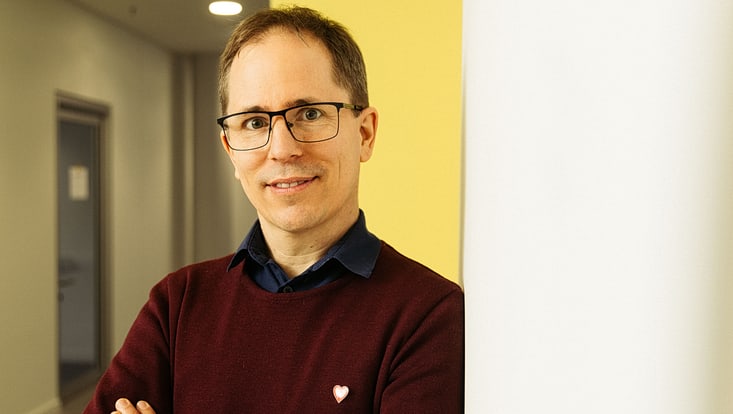
What are climate futures, which are desirable, and which are feasible? The Cluster of Excellence CLICCS brings together various actors and encourages thinking beyond conventional models of the future. In the following, CLICCS Speakers Johanna Baehr and Achim Oberg discuss the new project phase.
CLICCS has pursued interdisciplinary research into whether our climate targets can realistically be reached. What will be the focus areas going forward?

Johanna Baehr: We’re investigating the effects of climate change on our lives and, at the same time, how the way we live affects the climate. What climate the future holds depends on how we live, work and do business today. We’ll continue to focus on these questions, applying comprehensive expertise from the natural and social sciences. But now it’s about a broader understanding of climate futures.
We want to expand people’s imaginations and spark new discussions. Our guiding question is: how can desirable climate futures be achieved? Here, we won’t just do research, but also interact more intensively with civil society, politics and business.
How do you plan to expand the dialogue?

Achim Oberg: We’ll use a range of formats. It’s all about learning together so as to drive climate protection and climate-change adaptation forward. Our first goal is for people to have a clearer image of various potential climate futures. This “future literacy” will allow them to identify potential future developments, grasp them, discuss them and take action.
After all, climate futures are now mostly presented as grim dystopias, candy-coated utopias or vague promises of change. What’s lacking: plausible futures, that is, more desirable or less desirable scenarios that are based on research and conveyed in a straightforward way that promotes dialogue.
How will that literacy be fostered at the Cluster?
Baehr: It all begins with the academic discourse on future climate scenarios. We’ve introduced the “thought experiment” format to supplement natural sciences-based scenarios with social sciences expertise. These experiments not only broaden our perspective; they also reveal new avenues of research.
How do you approach potential futures that are still unimaginable for us?
Oberg: As a first step, and together with experts from 16 fields, we’ve begun assessing the political, technological and ethical impacts of climate change, and working with artists to make them something tangible. Together, we’ve developed the first life-worlds, which combine the various outcomes in areas like our daily lives, democracy, climate-change adaptation and society. Here, we also consider the hopes and goals of various social groups. Further experiments on a range of topics will follow. In this regard, we’ll invite experts from around the globe to Hamburg.
How can the experiments have a social impact?
Baehr: Stories, photos and videos can make abstract ideas more concrete, while also showing what we stand to lose. This could help motivate people to start questioning things and encourage them to make decisions that will help ensure the future they consider to be worth living in comes true.
The article was published in the CLICCS Quarterly magazine, the research news from the Cluster of Excellence "Climate, Climatic Change, and Society".