
CLICCS
Cluster of ExcellenceClimate, Climatic Change,
and Society (CLICCS)
and Society (CLICCS)
Photo: UHH/Denstorf
31 March 2026, by Stephanie Janssen
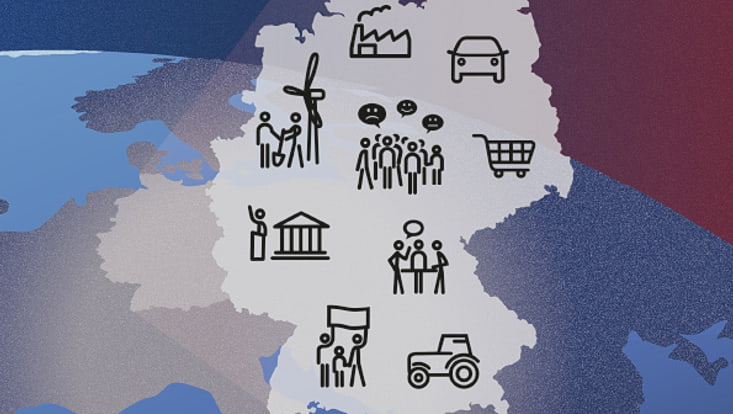
Photo: UHH/CLICCS/A. Linke
Politicians and business are dragging their feet, consumption isn’t getting any environmentally friendlier, a political shift to the right has made climate skepticism socially acceptable, and support for climate action is eroding in some parts of the populace. A team led by Prof. Stefan Aykut, Dr. Anna Fünfgeld and Prof. Eduardo Gresse has analyzed the socially relevant key processes and concluded: right now, it’s hardly realistic for Germany to be climate-neutral by 2045.
The study shows that climate neutrality can only be achieved through a fundamental social transformation. This includes binding laws and regulations, as voluntary commitments, e.g. those of firms, won’t suffice. Further prerequisites: a capable federal government and a populace that supports and shapes climate protection.
“Social pressure can have a critical influence on politics,” says Stefan Aykut. But, according to the study, the number of protests for more climate protection has significantly declined. What can help instead: forming local alliances that push for e.g. climate-friendlier infrastructure or heating grids. “Climate lawsuits are another effective means of achieving more climate protection,” Aykut claims. In this regard, the team has created the first comprehensive database, with currently 175 climate lawsuits filed in Germany.
To Climate Transition Outlook 2025
The article was published in the CLICCS Quarterly magazine, the research news from the Cluster of Excellence "Climate, Climatic Change, and Society".

